

For the past few years, vaping brand competition has revolved around specs: flavor count, device performance, battery life, smart features. More options, stronger performance — that drove the industry forward. But as most brands converge on similar configurations, a more fundamental question surfaces:
What consumers ultimately remember is rarely a spec sheet. It’s an experience that connects to their life.
This is exactly the shift happening in the energy drink industry right now.
Energy Drinks Took a Different Path
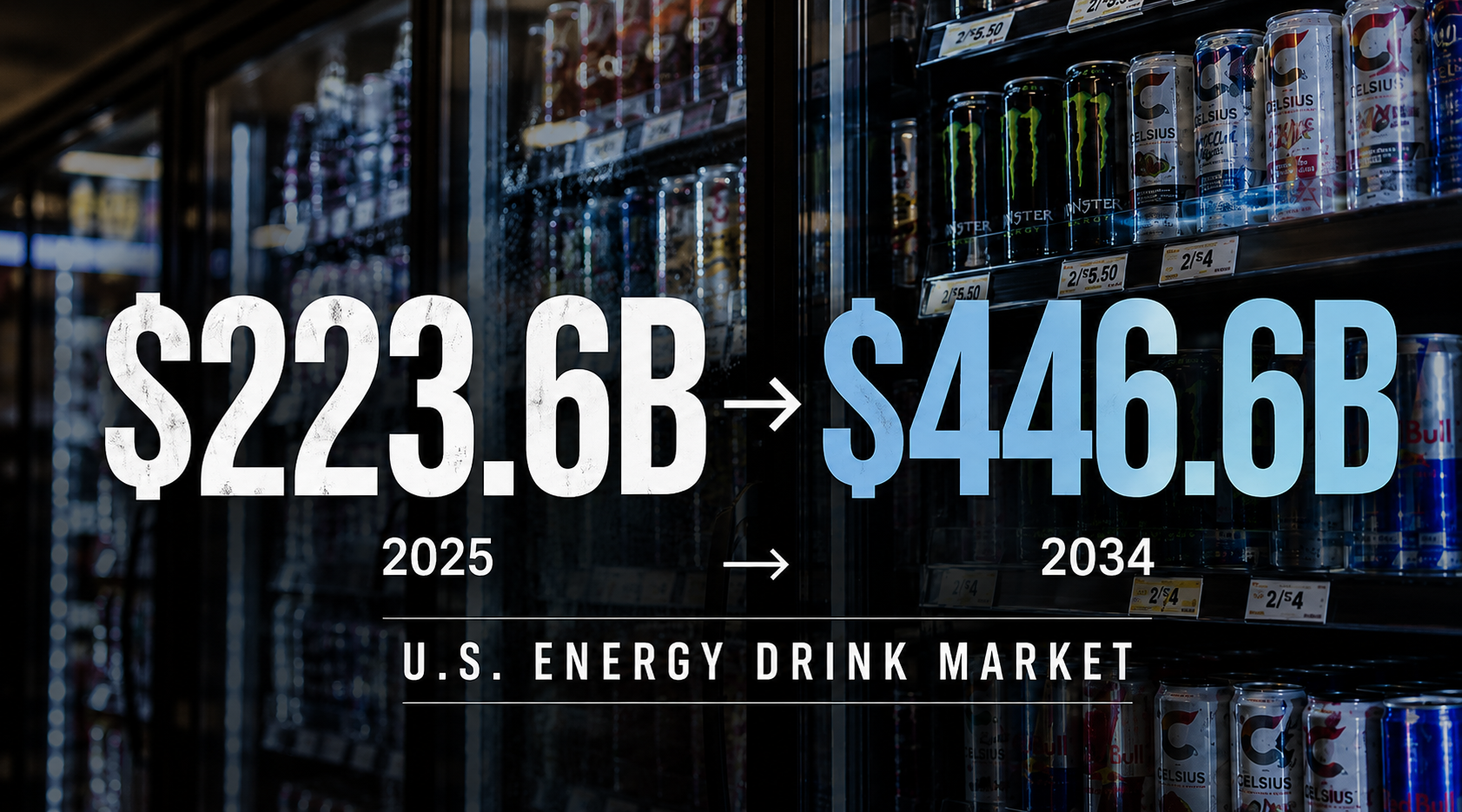
According to 2026 market research data, the U.S. energy drink market is projected to grow from approximately 22.36 billion in 2025 to roughly 44.66 billion by 2034 — a compound annual growth rate of about 8%. At that pace, the U.S. market will nearly double over the next decade.
What drives this growth isn’t just volume expansion — it’s structural change within the category. In 2025, traditional energy drinks still held about 41.73% of the U.S. market, but natural and organic, health-oriented energy drinks continue to expand, with the relevant segment projected to grow at a CAGR of approximately 4.33%.
The market isn’t growing because consumers are simply “drinking more.” It’s growing because what consumers want from an energy drink is changing.
From high-caffeine, high-stimulation formulations to low-sugar, zero-sugar, natural ingredients, and functional recipes; from a single “energy boost” use case to fitness, focus, work, commute, and daily state management — the category keeps extending into more consumption moments.
And the way brands are evolving makes this trend even more pronounced.
The Leaders Are Owning Different Consumer Moments
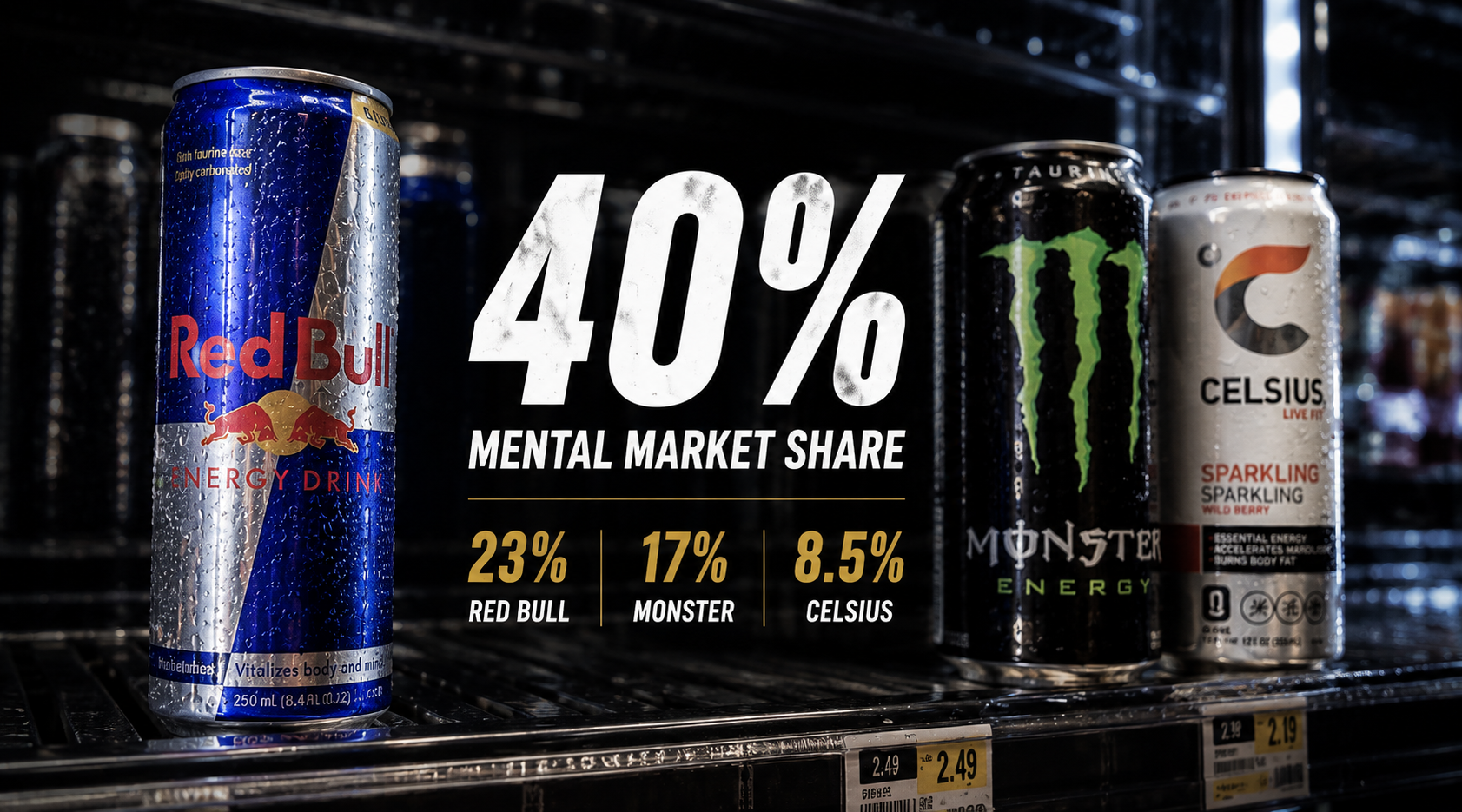
In June 2026, Morning Consult released its U.S. energy drink brand study, featuring a compelling metric: Mental Market Share.
This metric doesn’t simply measure how much was sold — it tracks which brand consumers think of first when a purchase need arises.
The results are striking:
- Red Bull: ~23%
- Monster: ~17%
- Celsius: ~8.5%
Red Bull and Monster still hold the commanding lead, together capturing roughly 40% of consumer mindshare. Celsius, despite a significant gap behind the top two, has emerged as the challenger to watch.
What’s more interesting: these brands aren’t simply competing on “who gives you a bigger kick.”
Red Bull does category education. It has long associated energy drinks with extreme sports, challenges, and pushing personal limits. When consumers think of high-intensity moments that demand peak performance, Red Bull naturally comes to mind.
Monster built a different, more intense consumer context. Extreme sports, music, motorsports, youth culture, convenience-store consumption — it reinforces a “today I’m going to go all out” state of mind.
Celsius took an entirely different entry point. It linked energy drinks to fitness, exercise, and a healthier lifestyle, differentiating itself from traditional energy drinks through zero-sugar and functional positioning. Morning Consult’s 2026 data shows Celsius has only about 49% brand awareness, yet it already maps to at least one purchase scenario among approximately 63% of consumers who recognize it. Awareness is its biggest growth bottleneck — but also its biggest opportunity.
Same category, different brands are competing for different consumption entry points.
And this trend has extended into even more segmented audiences.
Niche Doesn’t Mean Weak
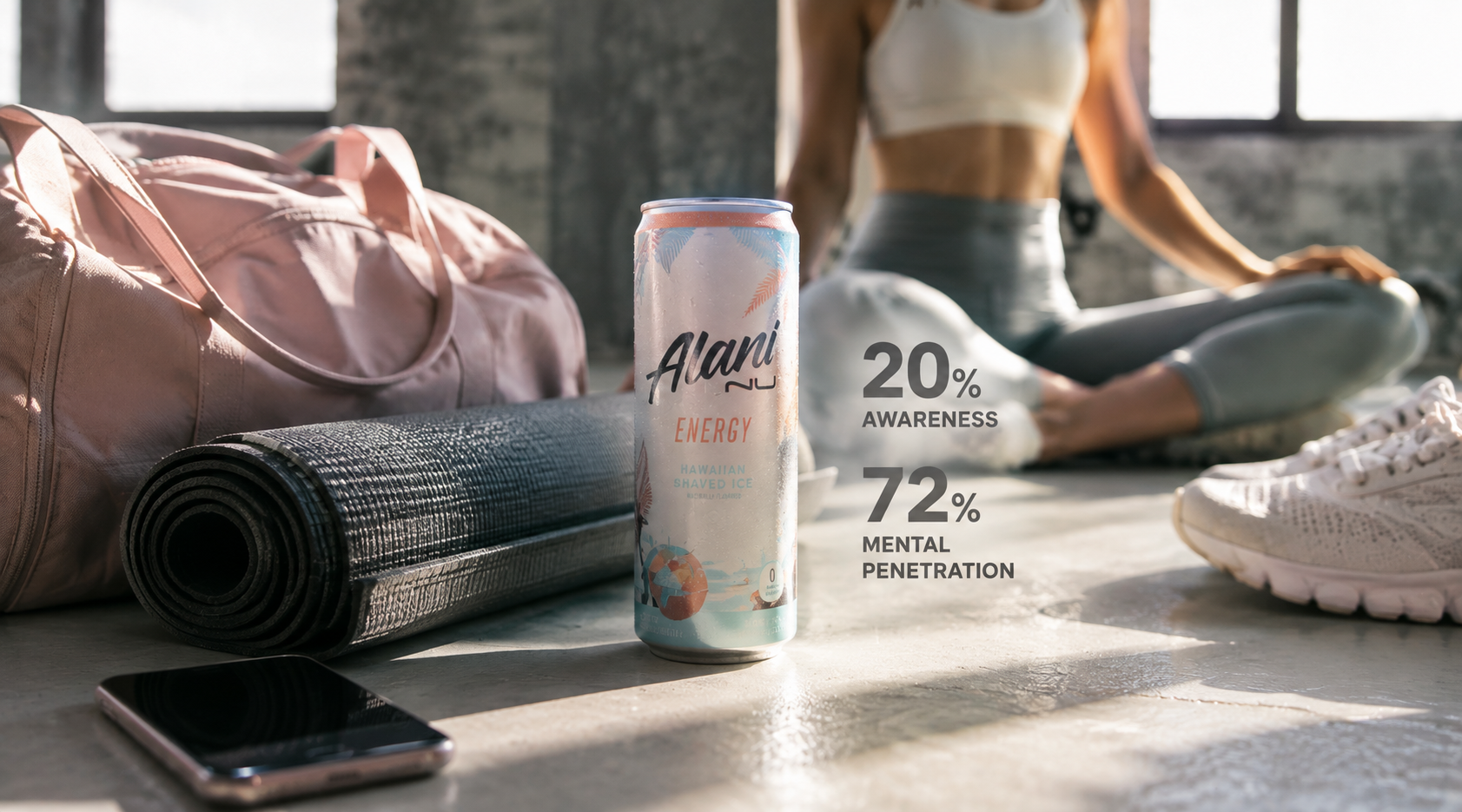
In 2025, Celsius completed its acquisition of Alani Nu for approximately $1.65 billion. Alani Nu had long focused on female consumers, fitness, and lifestyle scenarios. The brand subsequently entered PepsiCo’s distribution network in the U.S. and Canada, further expanding retail coverage.
Morning Consult’s 2026 data shows that while Alani Nu’s overall awareness is only about 20%, among those who do know it, the brand’s mental penetration rate reaches approximately 72% — nearly on par with Red Bull. Its consumer emotional connection score hits 3.5/7, higher than Red Bull’s 3.4 and Monster’s 3.3.
This tells us something: niche does not mean weak.
If a brand can build a strong enough connection within a specific audience and a specific scenario, it can still carve out its own growth space.
A New Brand Can Enter Through “Moments”

Bloom’s case is even more direct.
In July 2024, Bloom Nutrition — known for its dietary supplements and green powder products — entered the energy drink market. Six months later, the new energy drink line had generated $8 million in sales. By 2026, energy drinks had become Bloom’s primary revenue source, and together with its prebiotic soda product, the beverage business contributed approximately 75%–80% of total company revenue.
Bloom didn’t just add a SKU to a “green powder brand.” It executed a consumption-scenario migration: from “I want to manage my daily state” to “I need a bottle today” — a high-frequency consumption moment.
The product didn’t stay at the function level. It entered consumers’ daily lives.
What’s the Real Growth Code?

If you put these brands side by side, a common pattern emerges.
Product upgrades continue — Red Bull needs to maintain its taste signature, Monster needs to optimize flavor stability, Celsius needs to expand its flavor matrix, and Alani Nu needs to keep its innovation pace. But the gap between brands is no longer determined by “whose product is better.” It’s determined by a more fundamental question:
When does the consumer need me?
Morning Consult’s 2026 study confirms this. The primary purchase triggers for U.S. energy drink consumers:
Trigger Scenario | Share |
Need energy to get through the day | ~28% |
Want to improve mood | ~20% |
Want my favorite flavor | ~19% |
Coffee replacement / afternoon slump / long work / travel alertness | ~16%–17% each |
Energy drink growth isn’t just about consumers drinking more — it’s about the category entering more moments for more people.
From sports to commuting, from nightlife to work, from fitness to daily state management — the category’s boundaries keep expanding. And the growth of low-sugar, zero-sugar, natural-ingredient, and functional formulations further shows that consumers are no longer satisfied with “it works”: they want a better balance of function, taste, and lifestyle.
What Should Vaping Brands Think About?
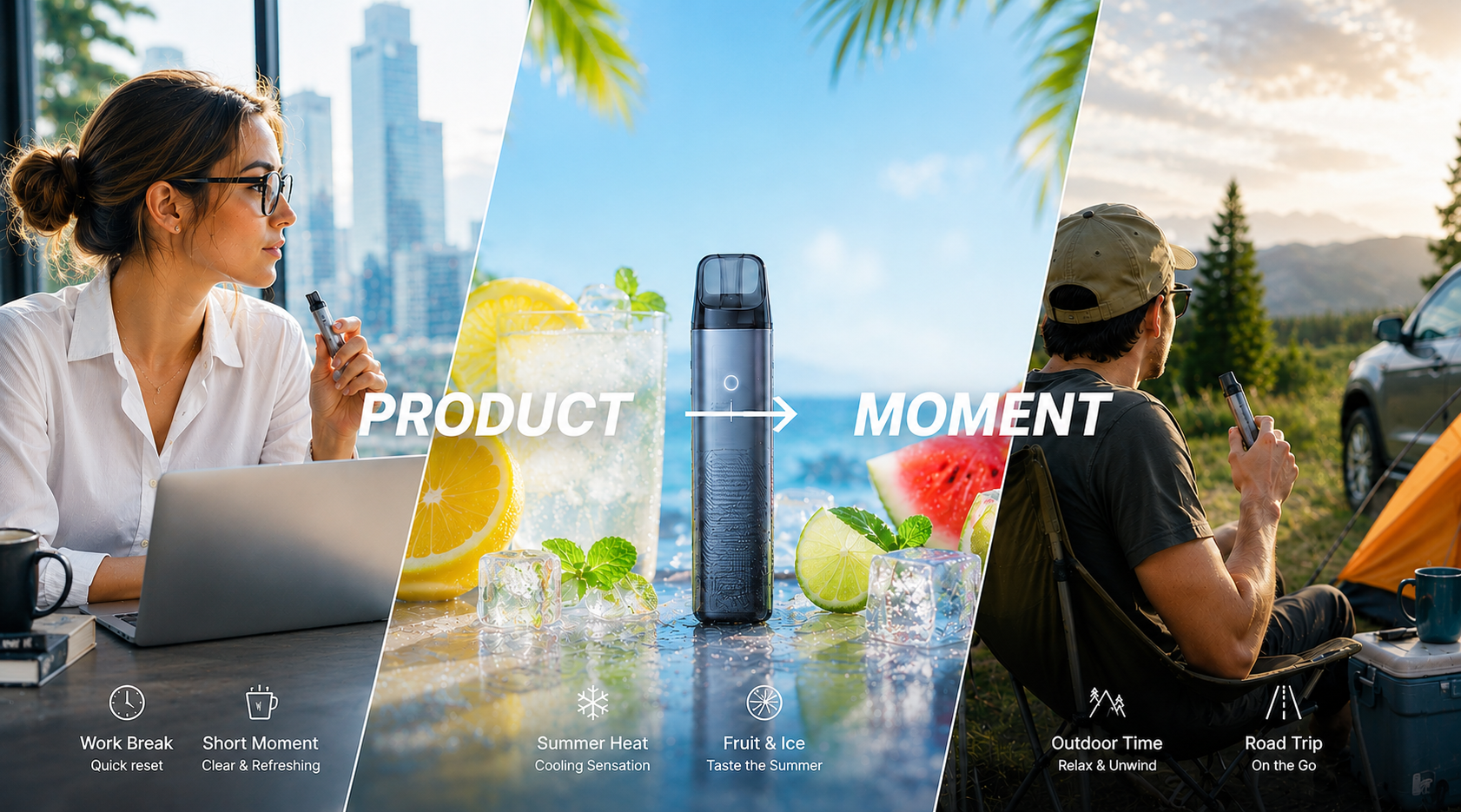
Back to the vaping industry.
Current competition still revolves around product options: more flavors, more combinations, stronger devices, longer battery life, richer features. But as products converge, brands can ask a different question:
Beyond offering more choices, how do you get your product into consumers’ more specific usage scenarios?
Shift the lens — instead of just making a “better vaping” product, make a product that fits a specific moment — and the competitive logic changes:
- In scorching heat, what flavor profile delivers the most refreshing sensation?
- During a work break, what flavor suits a brief moment of unwinding?
- On a weekend camping trip, what product fits the outdoor atmosphere?
- For the summer market, can you build a complete product theme around ice, fruit, and sparkling beverages?
These are no longer “which flavor is better” questions. They become: at what moment will the consumer think of this product?
The essence of scenario-based thinking isn’t slapping a marketing concept on a product. It’s transforming a product from an isolated “flavor option” into a specific choice within the consumer’s lifestyle.
What Does This Mean for E-Liquid Manufacturers?

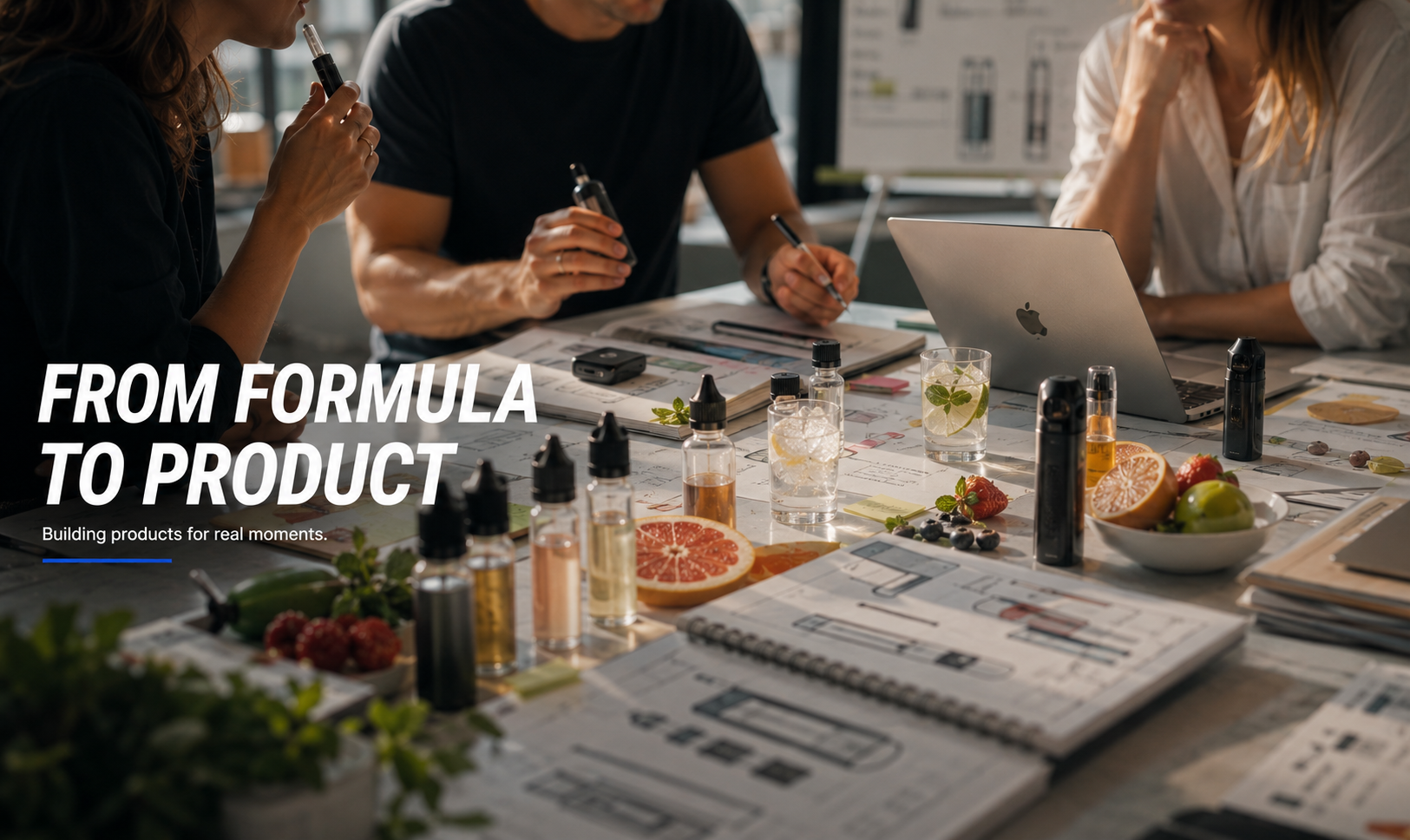
This is where the scenario trend becomes truly relevant to the supply chain. A brand articulates a scenario need — but it still has to come back to the product itself.
“Summer refreshment” means what kind of cooling curve? “Fruit beverage” requires how to handle sweetness, acidity, and juiciness? “Daily durability” means how to control flavor intensity and sweetness fatigue? How do you balance product experience with local regulatory requirements across different markets?
These questions ultimately need to be translated into specific flavor structures, formulation parameters, raw material standards, testing protocols, and mass-production processes.
Scenario-based development is not a one-sided marketing exercise for brands. It equally tests the product development capability of the supply chain.
For e-liquid manufacturers, the truly valuable capability isn’t just “we make what the client asks for” — it’s the ability to understand the product logic behind the brand: What audience is the brand trying to capture? What consumption scenario? What experience does it want consumers to have? How should that experience be expressed through flavor? How to maintain stability across different devices and usage conditions? How to meet compliance in target markets?
And then translate those abstract requirements into flavor solutions that can be mass-produced and delivered consistently.
That is the critical step where scenario thinking evolves from “marketing concept” to “product capability.”
Conclusion
Energy drinks and vaping belong to entirely different consumer categories. But from a consumer behavior perspective, both face a similar question: when the product itself becomes increasingly easy to replicate, what builds lasting differentiation?
The U.S. energy drink market offers one answer: continuously expand the connection between the product and consumers’ lives.
The growth from 22.36 billion toward 44.66 billion is the result; Red Bull, Monster, Celsius, and Alani Nu’s positioning across different consumption scenarios is the path; low-sugar, natural, functional, and audience segmentation is how the market keeps finding new growth space.
“Scenario-based” isn’t about renaming a product. What it truly changes is the relationship between consumer and product:
Not “I need an energy drink,” but “at this moment, it comes to mind.”
That may well be the direction worth exploring for vaping brands in the next phase. Future competition may not be about whose specs are higher or whose flavor menu is longer — but about who better understands consumers’ life scenarios and can translate that understanding into real product and brand capability.
For brands, this is an upgrade in product-definition capability. For e-liquid manufacturers, it’s an opportunity to evolve from “formulation supplier” to “scenario-based product development partner.”
When a product can enter more of a consumer’s moments, growth stops being a single transaction — it becomes a habit.
📌 About YTOO
YTOO specializes in e-liquid flavor R&D and manufacturing — from raw material sourcing, formulation development to full-scale production, all under one roof. We work with global brands to translate scenario needs into mass-producible flavor solutions.
📩 Business: info@ytoojuice.com 🌐 Explore: www.ytoojuice.com