

Gas Chromatography-Mass Spectrometry (GC-MS) has long been recognized as one of the most essential analytical technologies in modern e-liquid research and quality control.
Since the World Health Organization (WHO) released its Standard Operating Procedure (SOP 16) for non-targeted GC-MS analysis, GC-MS has become standard equipment in an increasing number of e-liquid laboratories worldwide. It remains indispensable for raw material verification, flavor profiling, formulation development, and quality assurance.
However, as analytical capabilities become increasingly standardized across the industry, a more fundamental question has emerged:
Why do manufacturers equipped with similar GC-MS systems still produce dramatically different levels of batch consistency and long-term product stability?
Using identical raw materials and comparable formulations does not necessarily guarantee identical product performance. Differences in batch consistency, storage stability, and device compatibility continue to distinguish leading manufacturers from the rest of the market.
Today’s competitive advantage no longer depends solely on analytical equipment. Instead, it lies in the ability to build an integrated quality engineering system that transforms laboratory data into consistent commercial production.
01 The Strengths—and Limitations—of GC-MS
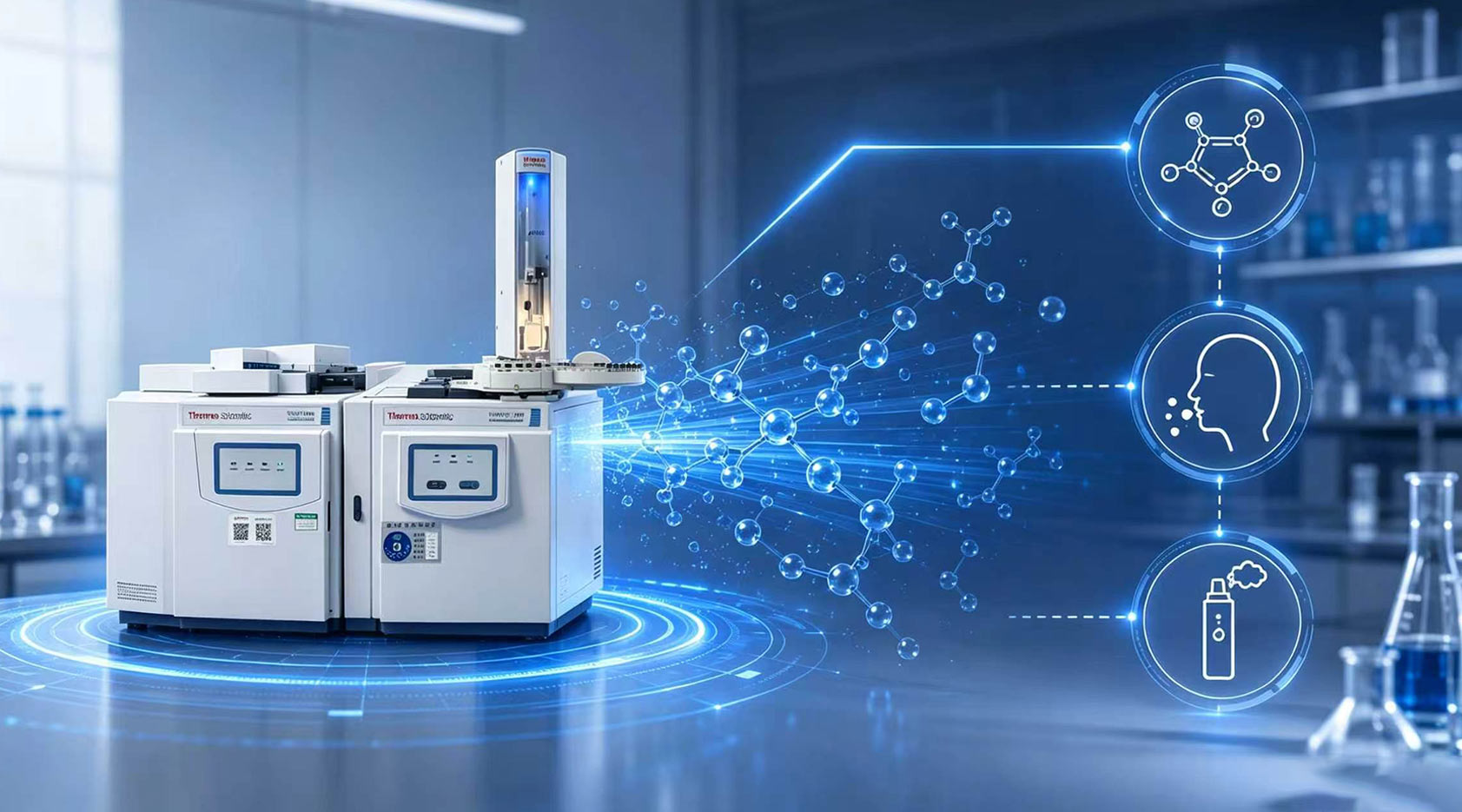
GC-MS plays a critical role in establishing volatile compound fingerprint profiles, enabling highly accurate qualitative and quantitative analysis of aroma compounds within e-liquid formulations.
Throughout the product development process, GC-MS is widely used for:
- Raw material verification
- Flavor compound identification
- Formula optimization
- Stability monitoring during storage
- Root-cause analysis of abnormal samples
For modern e-liquid R&D, GC-MS provides a robust scientific foundation.
Yet every analytical method has its limitations.
While GC-MS excels at detecting volatile compounds, it cannot fully characterize the complex interactions between non-volatile carriers such as PG/VG and flavor ingredients. It provides only a chemical snapshot at a specific point in time and cannot directly correlate analytical data with sensory perception, aerosol performance, or consumer experience.
More importantly, GC-MS cannot accurately simulate how different atomizer structures, coil resistances, airflow designs, and power outputs influence flavor release during real-world vaping.
Simply put, GC-MS can tell us what is inside an e-liquid—but it cannot fully predict how the product will perform in the hands of consumers.
As a result, GC-MS has evolved from being the defining standard of quality into one essential component of a much broader quality control ecosystem.
02 A Multi-Instrument Laboratory for Complete Product Characterization
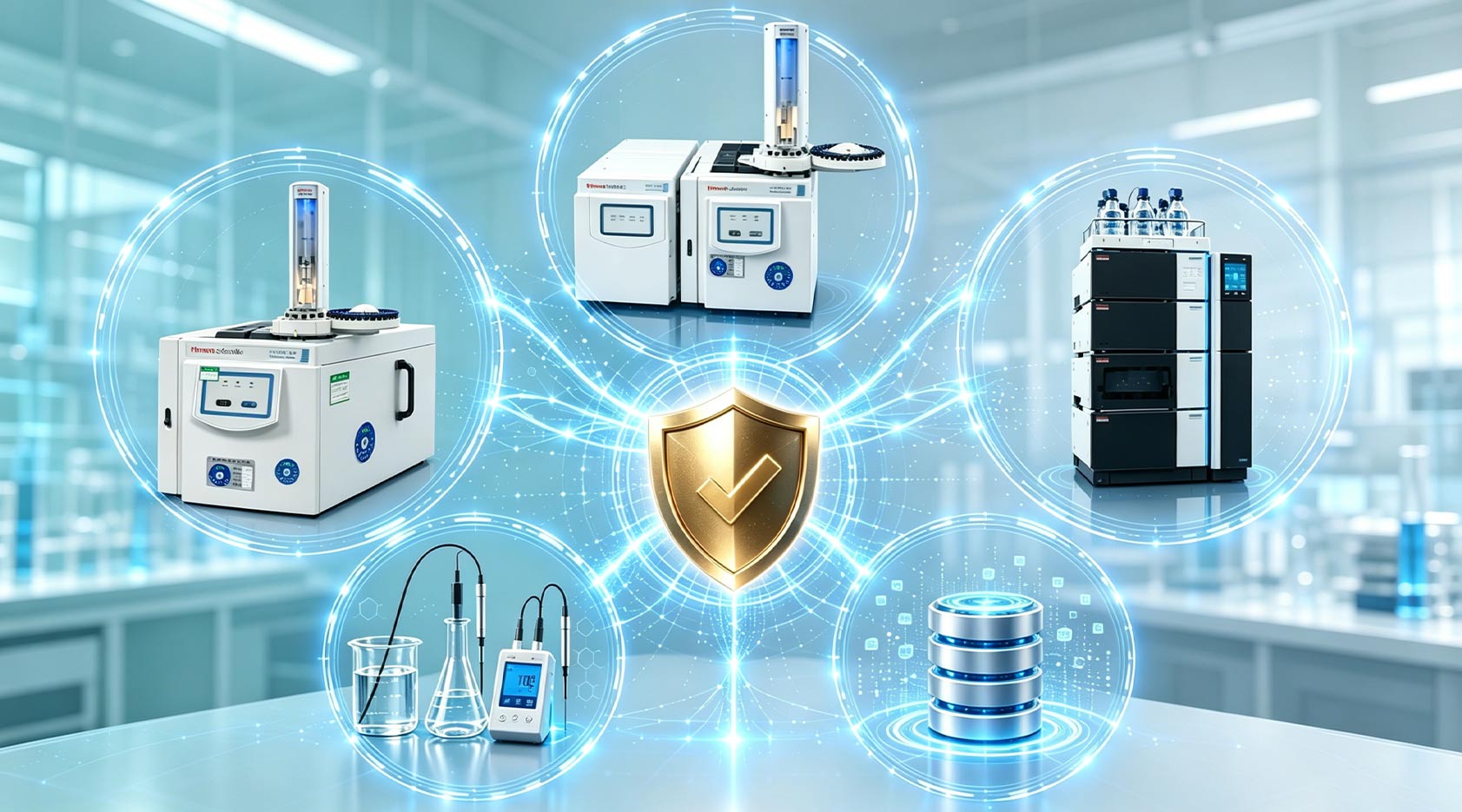
E-liquid is a highly complex multi-component system.
No single analytical instrument can comprehensively evaluate every quality attribute.
For this reason, advanced e-liquid manufacturers increasingly rely on integrated laboratory platforms combining multiple analytical technologies.
Supported by an 800-square-meter laboratory and multi-million RMB investment in analytical equipment, YTOO has established a comprehensive testing platform covering every stage of product development and quality verification.
Our laboratory capabilities include:
Gas Chromatography (GC)
Routine analysis of nicotine, PG/VG ratios, benzoic acid, and other fundamental components.
Gas Chromatography-Mass Spectrometry (GC-MS)
Identification, quantification, and traceability analysis of volatile flavor compounds.
High Performance Liquid Chromatography (HPLC)
High-precision quantitative analysis of cooling agents, thermally sensitive ingredients, and other target compounds beyond the scope of GC-MS.
Together, these complementary technologies provide a comprehensive analytical profile covering both volatile and non-volatile components, allowing product quality to be defined with significantly greater accuracy than any single analytical method.
03 Flavor Engineering: Transforming Data into R&D Intelligence

Sophisticated analytical equipment alone does not create superior products.
The true competitive advantage lies in the ability to accumulate, organize, and continuously learn from data.
Today, YTOO has built a structured database containing more than 30,000 flavor formulations, covering diverse flavor categories, base liquid systems, ingredient combinations, and device platforms.
During formulation development, our R&D team applies Design of Experiments (DOE) methodologies to systematically identify critical process variables while significantly shortening development cycles.
In parallel, Accelerated Aging Tests simulate long-term storage under elevated temperature and humidity conditions, allowing stability trends, flavor evolution, and ingredient behavior to be evaluated months before products enter the market.
When new customer projects begin, our engineers no longer rely solely on experience.
Instead, historical formulation data can be retrieved, compared, and analyzed to predict formulation behavior, reducing development time while improving reliability.
This transforms product development from trial-and-error into data-driven engineering.
04 MES Manufacturing: Reproducing Laboratory Results at Scale

Developing a successful laboratory formulation is only the beginning.
The true challenge is reproducing identical quality across thousands—or even millions—of finished bottles.
To achieve this, YTOO has fully implemented a Manufacturing Execution System (MES) that digitally manages every production stage from raw material receiving through filling and packaging.
Every production batch is assigned a unique traceability code, enabling complete visibility across:
- Raw material traceability
- Formula management
- Ingredient dosing
- Mixing parameters
- Steeping conditions
- Filling operations
- Finished product tracking
Combined with Statistical Process Control (SPC), the MES platform continuously monitors critical process parameters and immediately alerts operators whenever deviations exceed predefined control limits.
Quality management therefore shifts from detecting problems after production to preventing variability before it occurs.
05 Device Compatibility: Closing the Gap Between Laboratory Testing and Consumer Experience

GC-MS evaluates liquid samples.
Consumers experience aerosol.
Bridging this gap requires comprehensive device compatibility validation.
The same formulation may perform very differently depending on coil architecture, resistance, airflow configuration, and operating wattage. Flavor intensity, sweetness, cooling sensation, and aftertaste can all vary significantly across different hardware platforms.
For this reason, every commercial flavor developed by YTOO undergoes extensive compatibility testing across multiple resistance ranges, atomizer structures, and vaping devices.
The resulting performance data is continuously fed back into our formulation database, creating an evolving Formula–Device Compatibility Matrix that enables future formulations to be optimized based on real-world performance rather than laboratory assumptions alone.
Conclusion: Quality Is Engineered, Not Simply Tested
GC-MS remains one of the industry’s most valuable analytical technologies.
But premium e-liquid quality can no longer be defined by a single instrument.
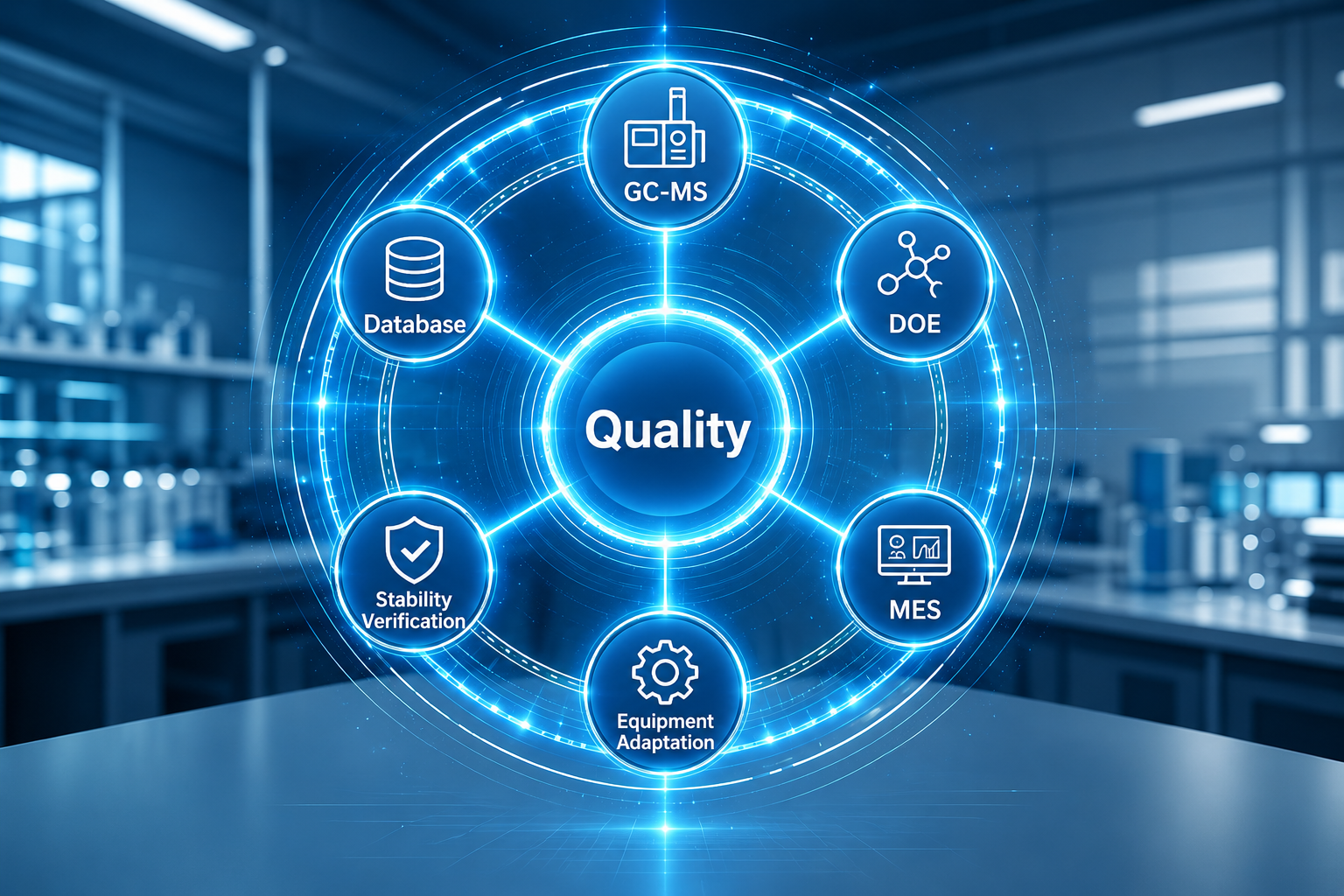
Instead, it depends on an integrated engineering system that combines advanced laboratory analysis, structured data management, formulation science, stability validation, intelligent manufacturing, and device compatibility testing.
At YTOO, our 30,000+ formulation database, multi-instrument laboratory platform, MES-driven manufacturing system, and comprehensive device validation process work together to build a quality framework that is measurable, traceable, and consistently reproducible.
For global OEM and ODM partners, we deliver more than compliant e-liquid products.
We deliver a reliable flavor engineering solution backed by science, data, and manufacturing excellence.
Your Taste, Our Obsession.