
 The UK Vaping Products Duty and duty stamp scheme has become a major focus for the vaping industry.
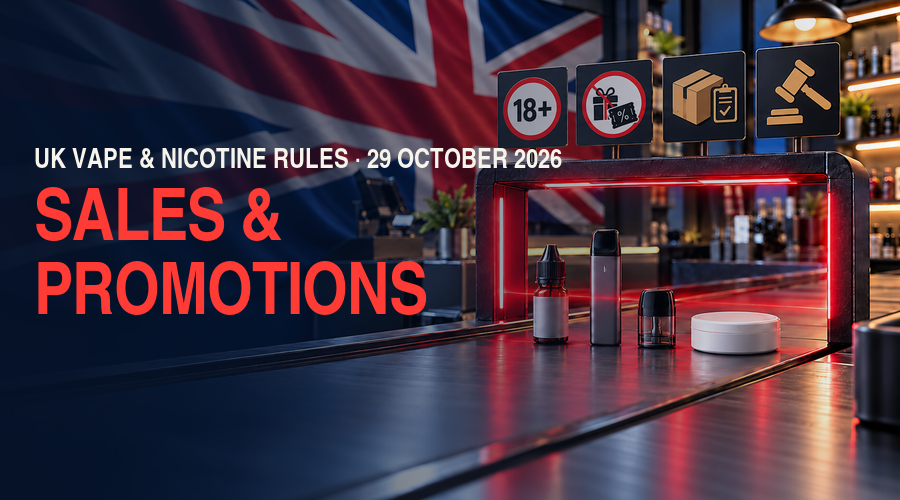
However, another set of rules affecting sales, promotions and sample distribution will take effect on 29 October 2026.
Under the Tobacco and Vapes Act 2026 and the accompanying government guidance, the minimum age of sale will apply to all vaping and nicotine products. Promotional giveaways, coupons and substantial discounts offered to members of the public will also face new restrictions.
01 | The 18+ Sales Restriction Will Include 0mg Products
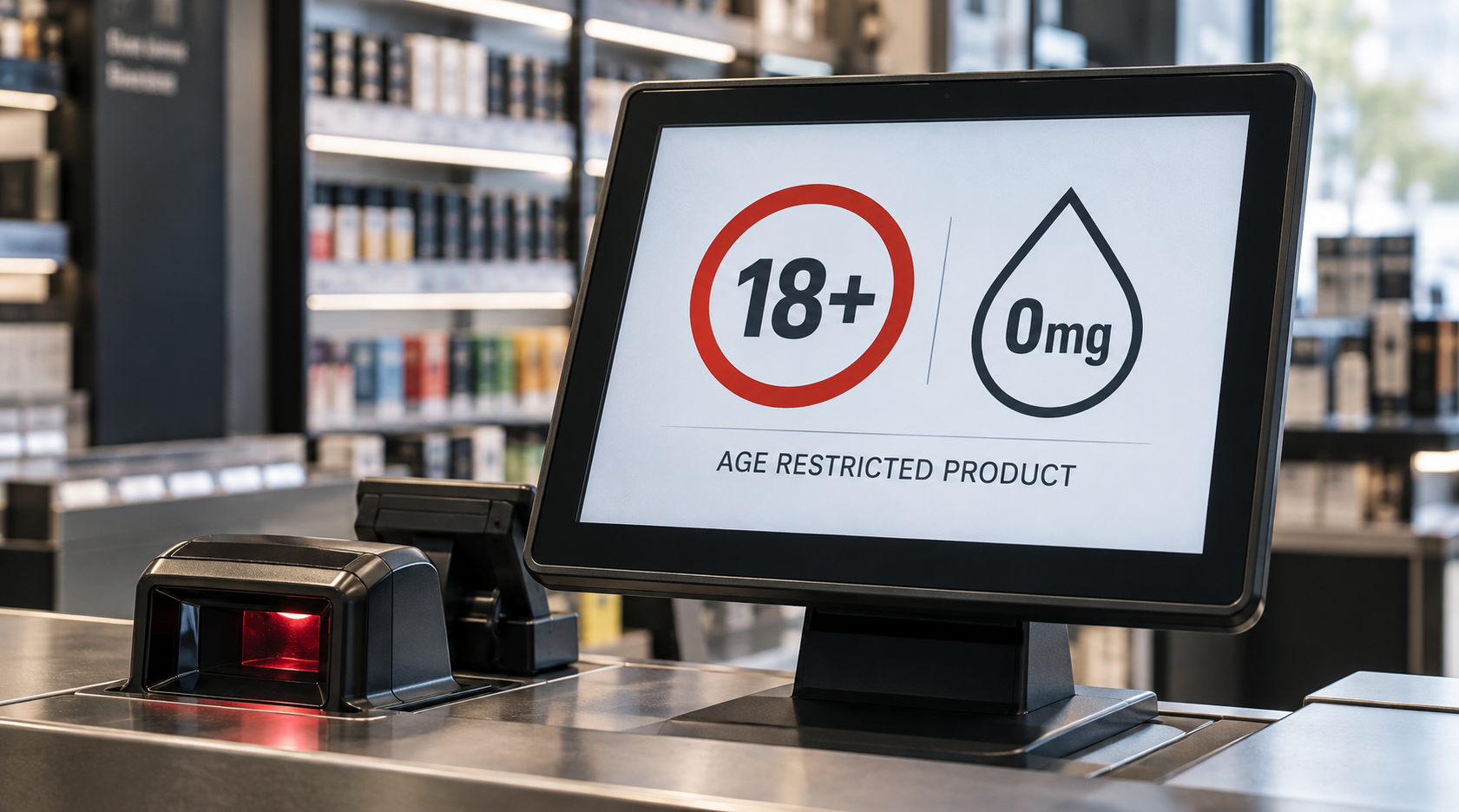
From 29 October 2026, it will be an offence to sell any vaping or nicotine product to a person under the age of 18.
Products within scope include:
Nicotine and non-nicotine vaping products
Substances intended for vaping, including e-liquid
Vape devices
Related components such as coils and pods
Nicotine pouches
Nicotine strips
Nicotine pearls
Products containing plant-derived or synthetic nicotine
The government guidance excludes ordinary batteries, charging devices and electrical leads from the products covered by these restrictions. These items remain subject to wider consumer protection and product safety legislation.
Products legally classified as medical devices or medicinal products are also outside the scope of these measures.
The existing age-of-sale position is not identical across all four UK nations.
In England, Wales and Northern Ireland, the previous restriction mainly applied to nicotine-containing vaping products. The new rules extend the restriction to non-nicotine vaping products and other nicotine products.
Scotland already applies age restrictions to both nicotine and non-nicotine vapes. From 29 October, its rules will also cover other nicotine products, including nicotine pouches, strips and pearls.
The restriction applies to both physical and online retail sales. Retailers must be satisfied that the customer is at least 18 and should verify age where there is uncertainty.
It will also be an offence for an adult to purchase, or attempt to purchase, a vaping or nicotine product on behalf of someone under 18. This is treated as proxy purchasing.
02 | Public Giveaways and Nominal-Price Promotions Will Be Restricted
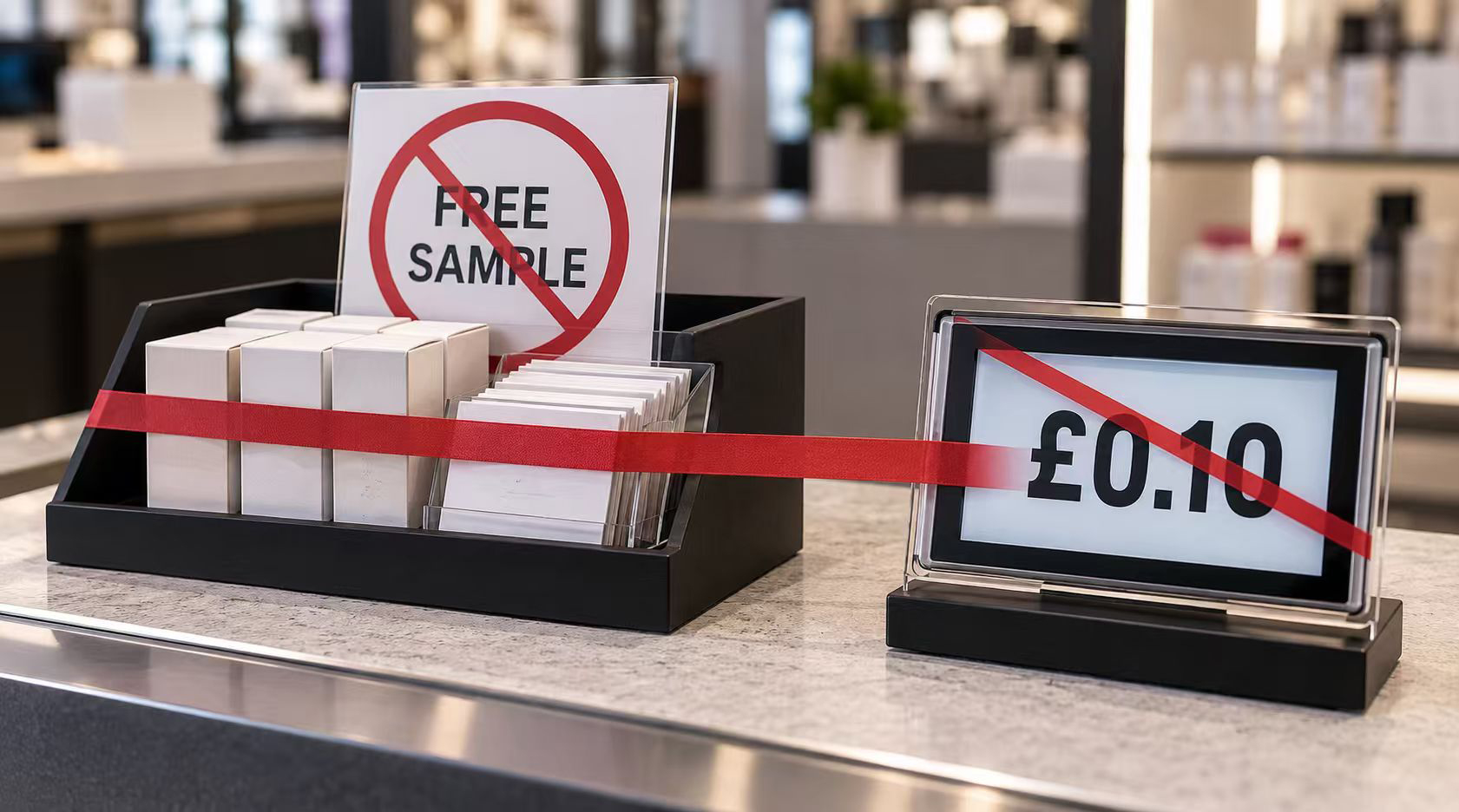
Businesses must not give vaping products, nicotine products or related coupons to members of the public where the purpose is—or the effect will be—to promote those products.
The restriction applies across physical stores, online channels and third-party promotional activities.
Examples given in the government guidance include:
Giving away refillable pods as a free gift
Providing free samples for customers to try
Giving away coupons that can be redeemed for a product, service, cash or another benefit
Coupons may be physical or electronic, including promotional codes distributed by email or online.
The restriction is not limited to vaping or nicotine products themselves. Other items may also be covered if they carry relevant branding and are used to promote a vaping or nicotine product.
The official guidance gives the example of a vape charger carrying vaping-product branding.
This does not conflict with the exclusion of ordinary charging devices from the age-of-sale rules:
An ordinary charger is not itself treated as a vaping product for the purpose of the 18+ sales restriction;
A branded charger used as a free promotional item or sold at a substantial discount may still fall within the promotion restrictions.
The Act also restricts substantial discounts used to achieve a promotional effect.
A substantial discount is a price reduction that significantly lowers the cost compared with the product’s usual selling price. There is no single percentage that automatically determines whether a discount is substantial.
The government guidance states that selling e-liquid, vape devices or nicotine products for a nominal amount—such as 10 pence—would likely constitute an offence.
Normal commercial discounting is not prohibited. Retailers may continue to reduce unsold stock as part of normal business, while genuine bulk and trade discounts may still apply.
The key consideration is whether the pricing arrangement is intended to promote a vaping or nicotine product, or is likely to have that effect.
The legislation also provides a defence for certain stop-smoking services operating under formal arrangements with public authorities. This may include programmes commissioned or provided by local authorities or NHS bodies.
03 | Where B2B Transactions Fit
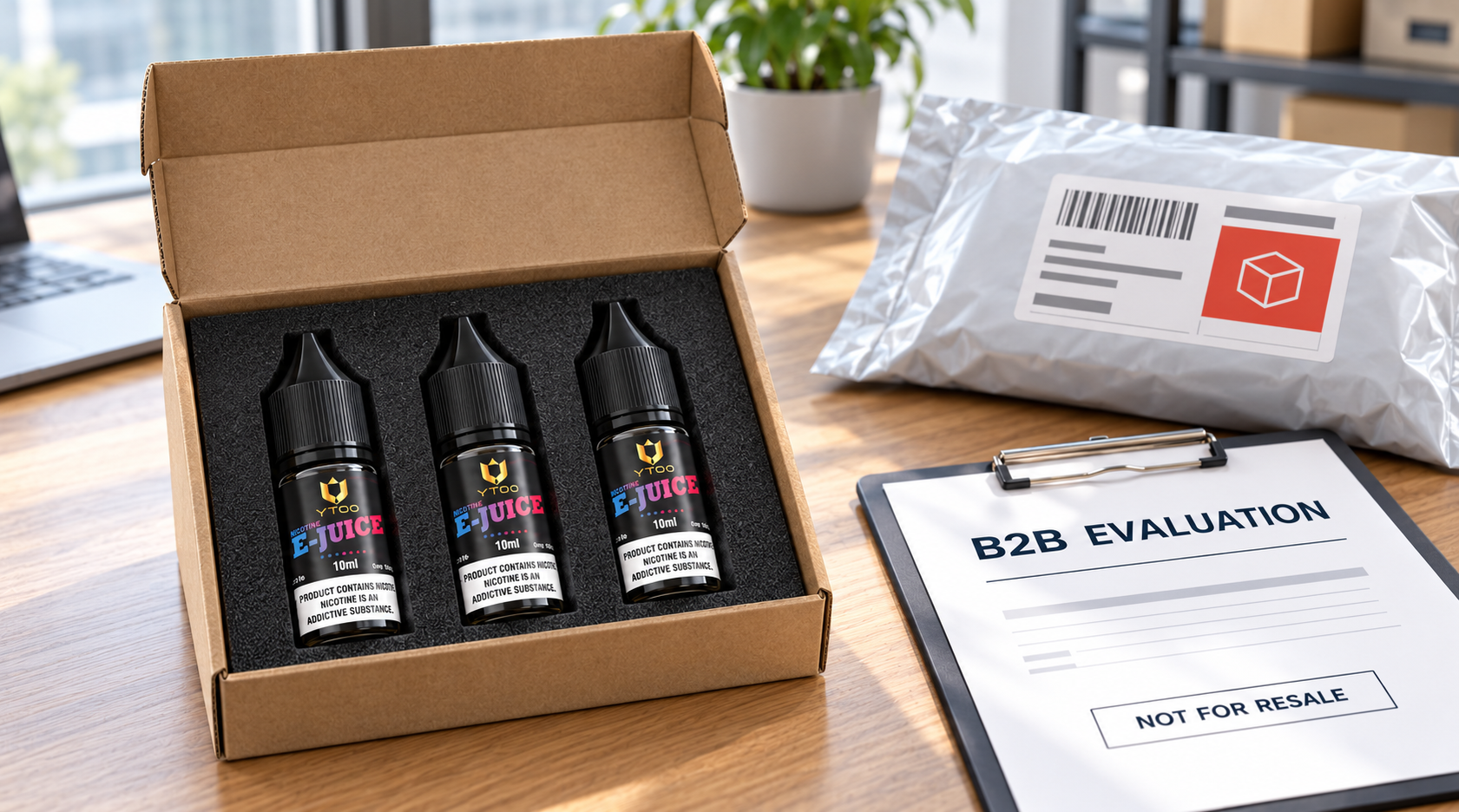
The government guidance states that the new age-of-sale restriction applies only to retail sales. It does not apply to business-to-business wholesale transactions or sales to an organisation.
The free-distribution restriction is a separate measure. It applies when a product or coupon is given to a member of the public and the purpose or effect is to promote vaping or nicotine products.
The two measures therefore address different situations:
The age-of-sale restriction concerns retail transactions;
The free-distribution restriction concerns promotional activities directed at members of the public.
The official guidance does not create a separate statutory category called a “B2B evaluation sample”, nor does it prescribe a standard label or document format for these samples.
Where products are supplied to business customers for evaluation, the circumstances still matter. Businesses should consider the identity of the recipient, the nature of the transaction and the product’s actual intended use when determining whether the arrangement could be regarded as public promotion.
04 | The Consequences Go Beyond Fixed Penalties
From 29 October 2026, enforcement authorities will be able to issue fixed penalty notices for offences including:
Selling relevant products to a person under 18
Proxy purchasing on behalf of a minor
Unlawful free distribution to members of the public
Promotional sales involving substantial discounts
The applicable fixed penalties differ by jurisdiction:
England and Wales: £200, reduced to £100 for early payment
Scotland: an initial amount of £200, reduced to £150 for early payment; the amount may increase by £200 for each relevant enforcement record within the preceding two years
Northern Ireland: up to £250 for relevant retail offences, subject to approval by the Northern Ireland Assembly and the applicable local provisions
A fixed penalty notice is not the maximum possible consequence. Enforcement authorities may instead pursue prosecution.
Under the UK standard scale for summary offences, level 4 is currently capped at £2,500 and level 5 at £5,000.
For underage sales offences, the maximum fine on summary conviction is level 4 in England, Wales and Scotland, and level 5 in Northern Ireland.
Proxy purchasing is a separate offence. The maximum fine is level 4 in England and Wales, and level 5 in Scotland and Northern Ireland.
Free-distribution and substantial-discount offences may also result in imprisonment:
England and Wales: on summary conviction, up to 12 months’ imprisonment, a fine not exceeding the statutory maximum, or both; on conviction on indictment, up to two years’ imprisonment, an unlimited fine, or both.
Scotland: on summary conviction, up to 12 months’ imprisonment, a fine of up to £10,000, or both; on conviction on indictment, up to two years’ imprisonment, an unlimited fine, or both.
Northern Ireland: on summary conviction, up to six months’ imprisonment, a fine not exceeding the statutory limit, or both; on conviction on indictment, up to two years’ imprisonment, an unlimited fine, or both.
Persistent offending may also lead to restricted sale, restricted premises or banning orders.
In England and Wales, three or more relevant offences within two years may result in restrictions lasting up to 12 months. In Scotland, three or more relevant offences at specified premises within two years may lead to a sales ban of up to two years. In Northern Ireland, three relevant offences within five years may result in restrictions lasting between 28 days and three years.
What Should Businesses Do After the Rules Take Effect?
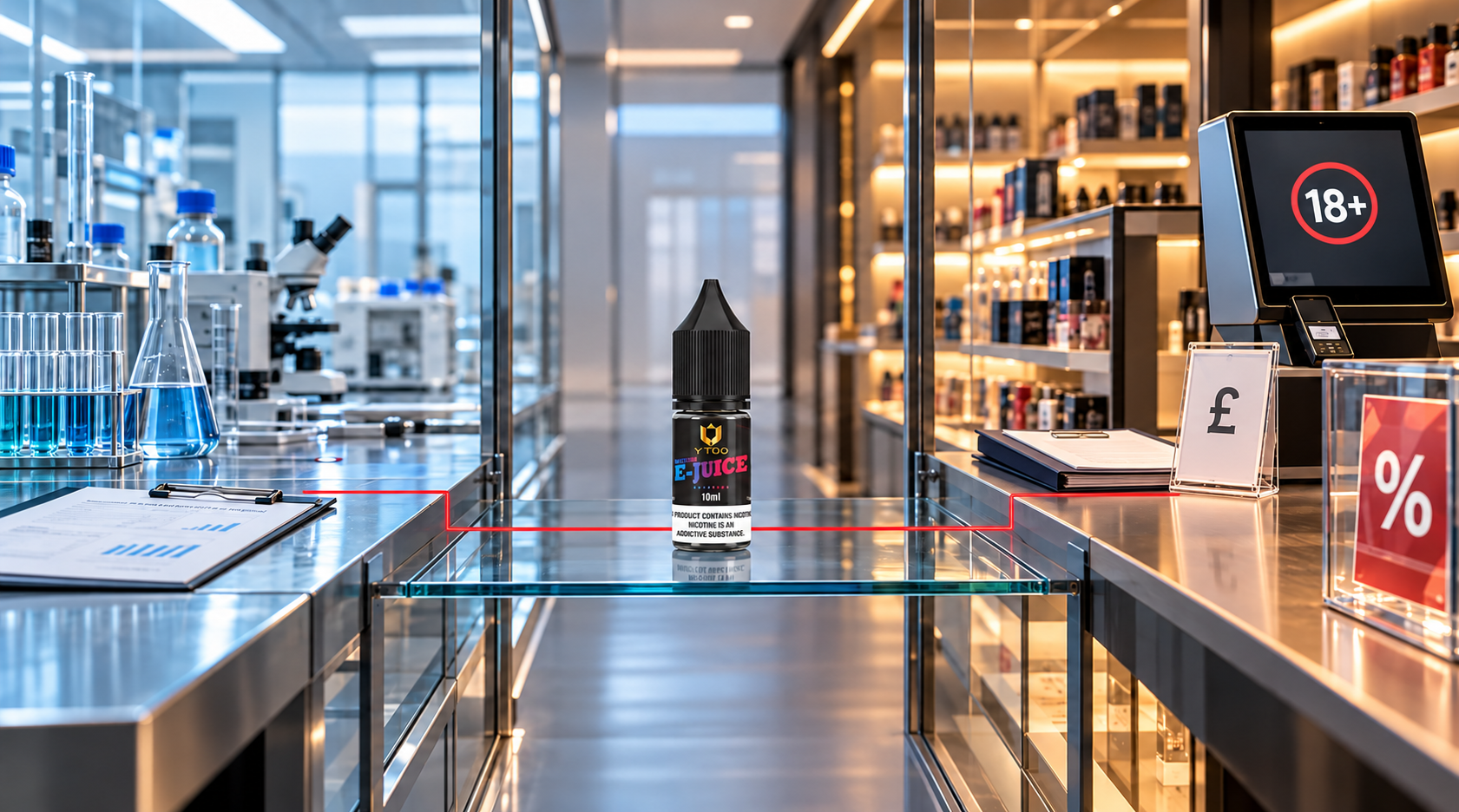
The new requirements should be incorporated into the day-to-day management of UK-facing operations.
Businesses should consider:
Adding 0mg products to 18+ sales and age-verification procedures
Ending free public trials and promotional giveaways
Reviewing coupons, free gifts and nominal-price offers before launch
Avoiding symbolic pricing intended to replicate a free giveaway
Separating consumer promotions from genuine B2B commercial evaluations
Keeping records of the recipient, quantity, purpose and onward movement of B2B samples
Ensuring UK partners update website controls, retail procedures and staff training
For samples supplied for formulation evaluation, purchasing tests or commercial approval, businesses may verify the recipient’s company or organisational identity and use wording such as:
Evaluation Sample
Not for Resale
The recipient may also be informed that the samples must not be used for consumer distribution, retail giveaways or public promotional campaigns.
These records and labels are risk-management measures rather than mandatory formats prescribed by the legislation.
UK compliance is continuing to expand beyond product notification, volume limits, nicotine strength, packaging and testing documentation. How a product is sampled, discounted, distributed and promoted after entering the market is becoming equally important.
YTOO will continue to monitor regulatory developments in the UK and support customers with market-specific product development and relevant compliance documentation.
This article is based on UK government information available as of 22 October 2026. Businesses should refer to the latest requirements issued by the relevant UK authorities when making operational decisions.